

It's a Process: How to Actually Execute Your Marketing Strategy (One Agency Marketer's Honest Story)


I used to love strategy season.
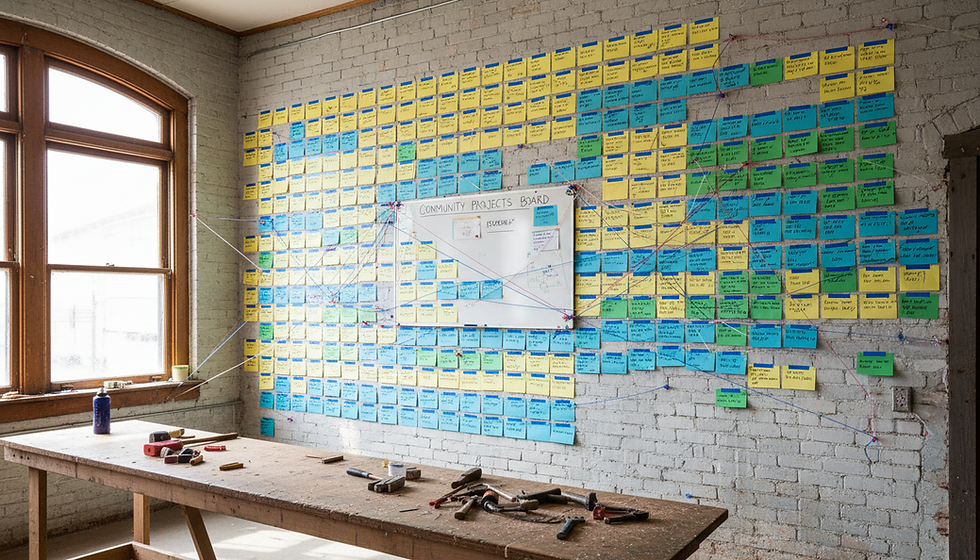
You know the vibe: Offsite somewhere with good coffee. Whiteboards covered in sticky notes. The team throwing around phrases like "north star" and "omnichannel ecosystem." We'd leave feeling electric. Like we'd finally cracked the code.
Then Monday would come.
The client would email. Subject line: "Quick pivot—nothing major." The "quick pivot" would unravel three months of planning. By Wednesday, the strategy deck was buried in a folder named "Q2 Plans FINAL_v4" that I was too tired to open.
I started dreading the very process I once loved. Not because the strategy was wrong. Because the gap between the slide and the Slack notification was swallowing me whole.
The Tool That Sat Empty (Until I Actually Used It)
Here's the embarrassing part: We had Asana the whole time.
I'd built a beautiful project board once. Color-coded. Milestones set. Assignments clear. And then I abandoned it the moment the first client pivot hit. I told myself it was faster to manage everything in Slack and email. I told myself the board was "too rigid" for agency life.
I was wrong.
The board wasn't the problem. I was. I was using Asana like a static to-do list instead of what it actually is: a living, breathing command center that bends with the chaos instead of breaking under it.
What Finally Clicked (Once I Stopped Fighting the Tool)
I went back to the Asana guide, the one about creating and executing marketing strategies and this time I actually listened.
Here's what changed when I stopped treating Asana as optional and started treating it as the operating system for our entire agency workflow:
I made pivots part of the process, not exceptions to it. Asana's point about making workflows repeatable? Game-changer. We created a template for "Client Pivot Requests." It sounds absurd, but now when a curveball comes, we don't panic. We just duplicate the template, assign ownership, set new milestones, and keep moving. The pivot has a home. The chaos has structure.
I gave my team back their time by making work visible. My team was drowning in "where are we on this?" messages. Half their day was status updates. Once we committed to tracking all strategy work in Asana—visible to everyone, updated in real time—the Slack noise dropped. People stopped asking. They just looked. And time, I've learned, is the only thing agency margins can't buy more of.
I protected my team's creative energy. Nobody joined an agency to chase approvals or update spreadsheets for three hours a week. We used Asana's templates and automation to handle the administrative coordination. We let the tool manage the process. We let the people manage the craft. Morale climbed. So did the quality of the work.
I stopped hiding the strategy in a folder. Asana's advice to put strategies in a place everyone can see? I used to ignore that. Now our quarterly strategy lives as a living project in Asana. Every tactic ladders up to it visibly. My team knows why they're doing what they're doing. And when the client asks for a status update, I don't scramble. I just open the project and we walk through it together.
Where I Landed
I still believe in strategy. I still believe in the north star and the whiteboard sessions. But now I believe in something more: a tool that holds the mess without letting the mess break my team.
Asana gave us the blueprint. We just had to actually live inside it.
If you're sitting in the gap between the strategy deck and the daily chaos, if you're tired of beautiful plans that don't survive Monday, I get it. I lived there for years. And I promise, the way out isn't a new process. It's using the one you already have with intention.
We're here to help you do exactly that: improve workflow, increase productivity, and give your marketing team the collaboration tools to execute without the burnout.
Stop surviving the pivot. Start owning the process.


Comments