

What is Agentic Work Management?

Updated: 1 day ago
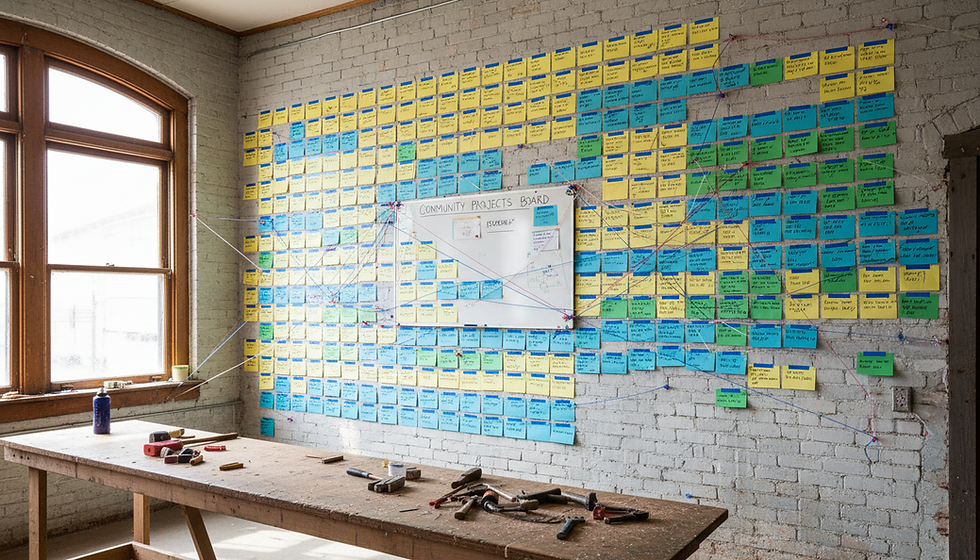
For twenty years, "work management" meant a place to store work: tasks, owners, due dates, status. A human read the board and did the next thing. Agentic Work Management breaks that assumption. In this model the software doesn't just hold the plan it can also act on it, because AI agents sit inside the same projects as your team, with the same context and the same rules.
Asana defines it in one sentence: "Agentic Work Management is how people and agents run critical workflows together, on one plan, powered by the Work Graph." This article unpacks what that means, the research behind the shift, and how to adopt it without the hype.
A clear definition
Ready to put people and agents on one plan? Workflow Alchemy designs agent-ready Asana workflows mapped before they are automated. |
Agentic Work Management (AWM) is an operating model in which autonomous AI agents and human teammates collaborate on the same workflow, sharing context, permissions, and accountability rather than humans using AI as a separate chatbot on the side.
The key word is agentic. A chatbot answers a question and stops. An agent is assigned an outcome, takes multiple steps to reach it inside your real system of record, and checks back in for human approval at defined points. The difference isn't intelligence it's agency inside the workflow.
THE ONE-LINE TEST If your AI can read your work but can't move it forward, assign, update, route, report you have AI features. If it can take the next step on a real task, with a checkpoint for you to approve, you have agentic work management. |
Why it's happening now (the data)
This isn't a vendor invention looking for a problem. Adoption is already mainstream and expectations are steep. Asana's State of AI at Work 2025 surveyed 9,236 knowledge workers across the US, UK, Germany, Japan and Australia between February and August 2025. The headline numbers:
70% | of knowledge workers now use AI at work weekly |
27% | of workload already delegated to AI today |
43% | of work expected to be handled by AI within three years |
67% | of organizations haven't scaled AI past a few experiments |
Read those together and the tension is obvious: individuals have adopted AI fast, but organizations have not operationalized it. Two-thirds of companies remain stuck in isolated pilots. Agentic Work Management is the proposed bridge, a way to move AI out of scattered chat windows and into the workflows where accountability already lives.
The gap isn't adoption. It's operationalization. Workers delegate 27% of their workload to AI today and expect to delegate 43% within three years but 67% of organizations have no scaled system for that work to run inside.
Agentic vs. traditional work management
Table 1: How the operating model changes
Dimension | Traditional | Agentic |
Who acts | Humans only | Humans and AI agents, on one plan |
AI's role | Suggestion / chatbot | Collaborator assigned to real tasks |
Context | In heads & docs | Shared graph of tasks, goals, ownership |
Control | Manual hand-offs | Human-in-the-loop approvals & guardrails |
Unit of value | A task done by a person | An outcome by a person–agent team |
Metering | Per seat | Per seat plus AI usage |
The four pillars
Every credible agentic system rests on four things. Miss one and it degrades back into a novelty chatbot.
1. A shared source of truth
Agents can only act reliably if the plan is structured and in one place. Asana calls its version the Work Graph, the connected map of tasks, projects, goals, and who owns what. Without structured context, an agent is guessing.
2. Real workflows, not a sidebar
The agent lives inside the project, with the same fields, statuses and rules your team uses. Asana's AI Teammates are described as agents that "work alongside your team inside real workflows with shared memory, governance, and context."
3. Governance and human-in-the-loop
Agency without control is a liability especially when 64% of employees say they find AI agents unreliable and two-thirds don't yet trust them. Checkpoints, permissions and approvals are not optional; they're what make delegation safe.
4. Orchestration
Someone has to decide which agent does what, and when. In Asana that role is Dash, an "AI chief of staff" that surfaces what's stuck and routes it to the right AI Teammate while you keep approval.
How Asana implements it
Table 2: The three layers of Asana's agentic platform
Layer | What it is | Best described as |
AI Teammates | 30+ prebuilt AI agents you assign work to | The workers |
Asana Dash | Personal orchestrator that surfaces & routes work | The chief of staff |
AI Studio | No-code builder for custom Smart workflows | The factory |
The important structural point: they are not separate products bolted together they draw on a shared Work Graph and a shared AI Request pool, which is what makes "one plan" possible.
Where to start (without the hype)
Because 64% of workers still doubt agent reliability, trust is earned per workflow, not granted platform-wide. A pragmatic sequence:
A 4-STEP ADOPTION PATH 1. Map one high-drag workflow pick something painful and repetitive (intake, status reporting, campaign coordination). 2. Put a human-in-the-loop agent on it, approvals on, autonomy low. 3. Measure the recovered time against a real baseline. 4. Widen scope only once trust is earned, expand autonomy workflow by workflow. |
This is the "fix the workflow first, then automate" principle: an agent placed on a broken process just makes the mess move faster. Agentic Work Management rewards teams that have already mapped where the work actually flows.
KEY TAKEAWAYS
|
IS YOUR TEAM AGENT-READY? Wondering how agent-ready your workflows actually are? Take our free Agentic Workflow Readiness Scorecard for a tailored view of where your workflows stand today and the highest-impact fixes to make first. → Take the Agentic Workflow Readiness Scorecard (free) Prefer to talk it through first? Book a call with Workflow Alchemy |


Comments